Halloween at home can mean drawing a friendly monster, hunting for a pumpkin’s missing treasure, or making up a story about a ghost who sleeps with the light on. These five activities are designed for kids ages 4–8, using everyday supplies and make-believe—not jump scares or darkness.
Start with your child’s comfort level
A smiling ghost may look funny to one child and unsettling to another. Your child can choose which characters join the fun, whether to wear a costume, and when to stop.
If something feels too scary, a simple response is enough: “You don’t like that ghost. We can put it away.” There’s no need to turn the evening into a test of bravery.
For a child who enjoys choosing a character, the opening question could be “Team Dragon or Team Witch?” A pumpkin, cat, or favorite stuffed animal works, too.
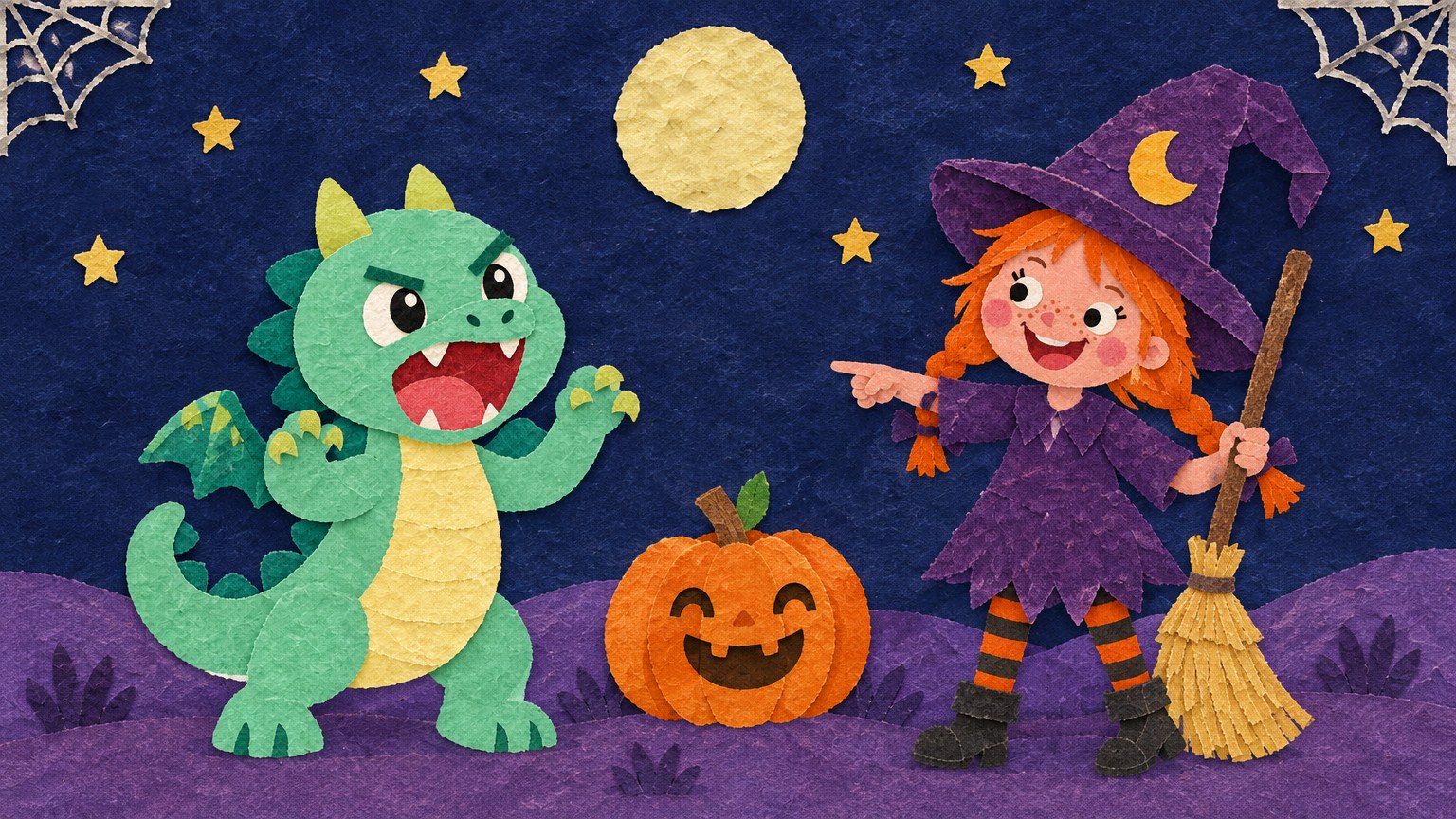
5 easy Halloween activities to do at home
1. Draw a monster who needs a friend
You’ll need: Paper and crayons or markers.
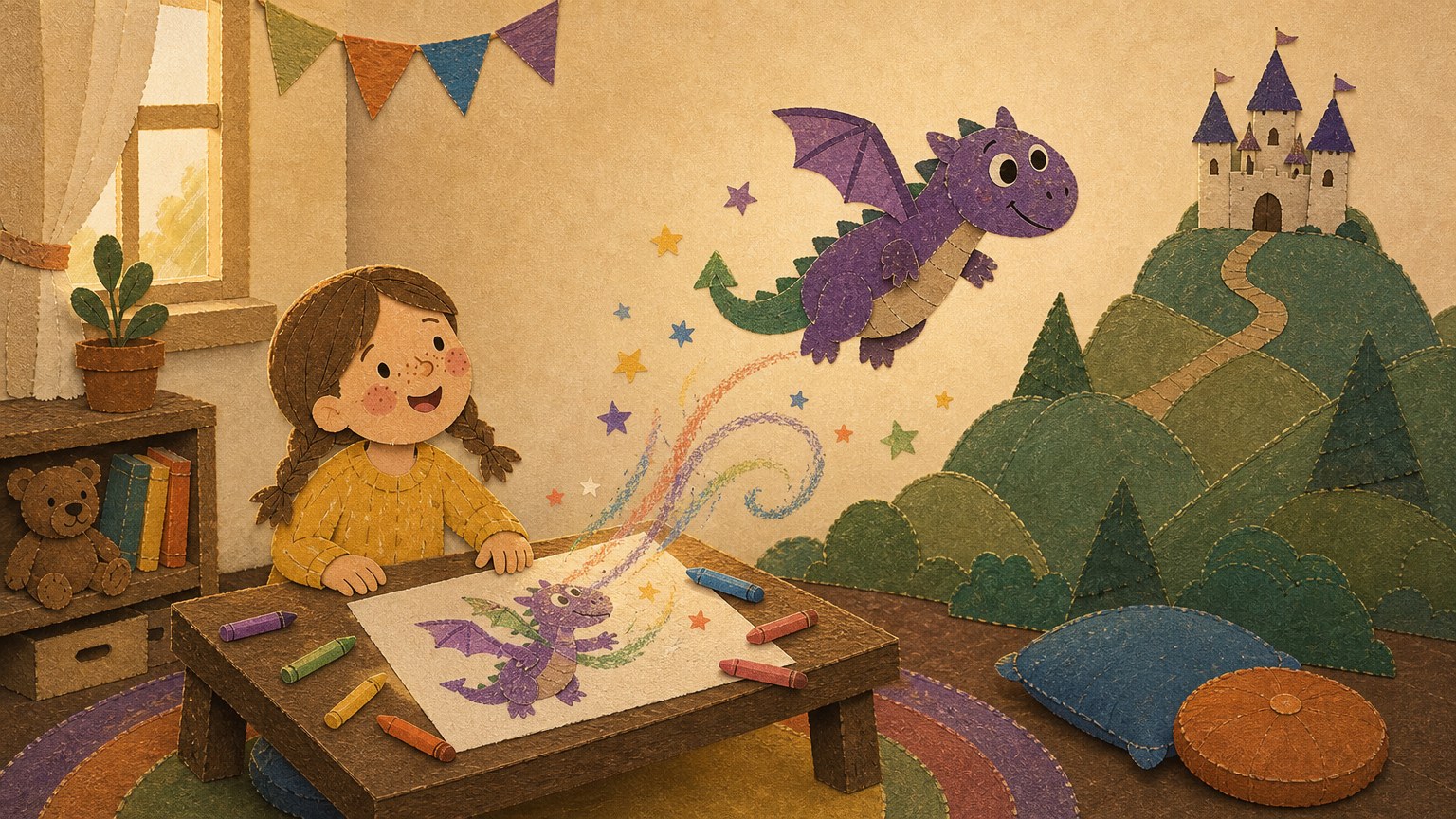
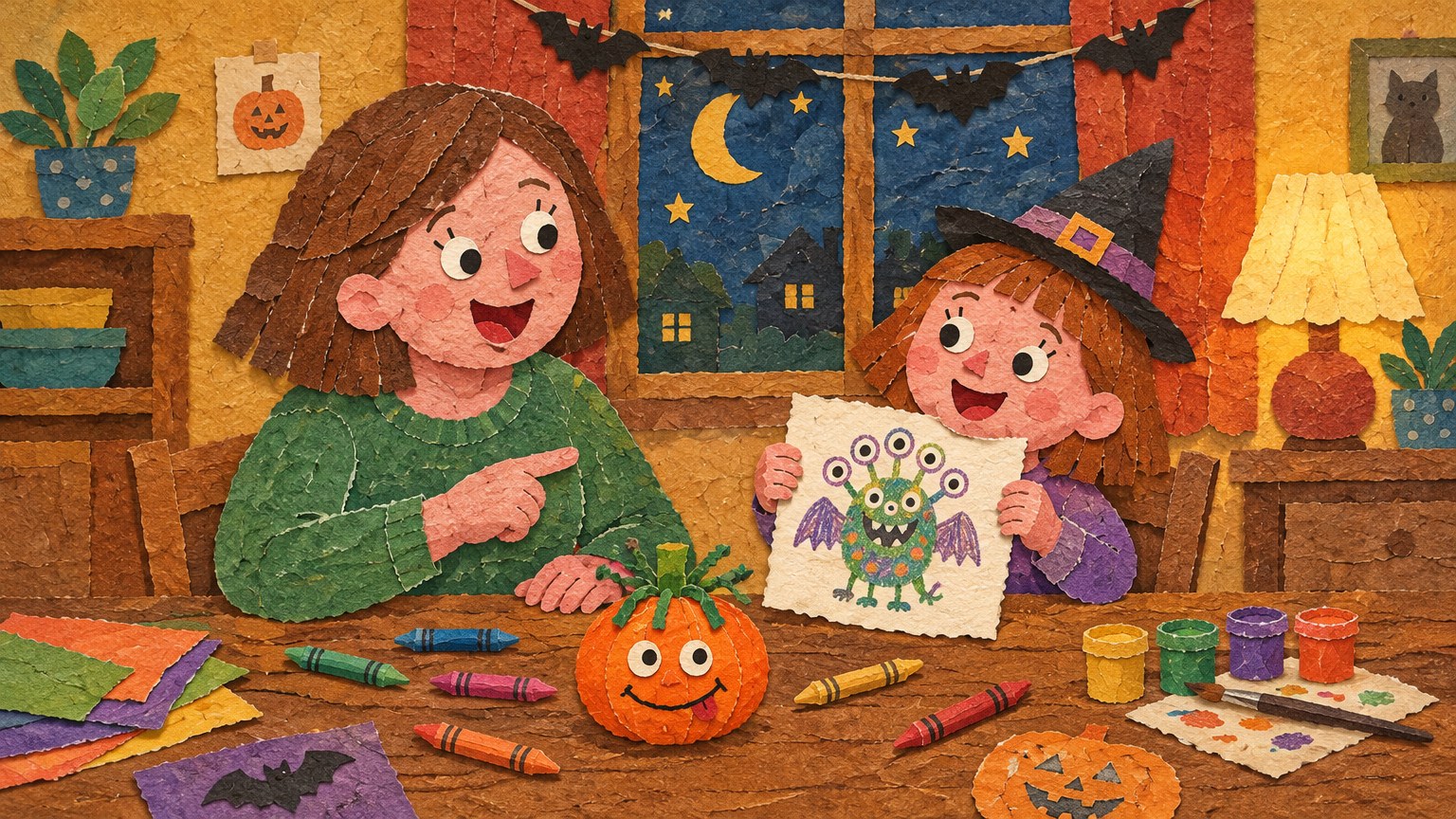
Start with any shape, then add eyes, feet, wings, or wonderfully impractical ears. Your child decides what makes this monster friendly.
A few questions can help:
- What’s its name?
- What makes it laugh?
- What would it like to play with a new friend?
You don’t need to identify every mark on the page. “Tell me about your monster” is a useful way to talk about your child’s drawing without deciding what it means for them.
2. Make a no-carve pumpkin with a personality
You’ll need: Paper, crayons, and optional glue or modeling clay.
An adult can cut out a paper pumpkin shape ahead of time, or your child can draw one. Add a sleepy face, a crooked grin, or paper-strip hair. Modeling clay can become eyebrows, a nose, or a tiny hat.
For a changeable version, leave the paper features unglued. Your child can rearrange them to make the pumpkin surprised, cheerful, or ready for bed.
There’s no need for a real pumpkin, carving tools, or candles.
3. Set up a friendly treasure hunt
You’ll need: A few paper pumpkins and a favorite toy to serve as the treasure.
The setup: a forgetful dragon has misplaced a toy and needs help finding it. Paper pumpkins mark the route through a well-lit room.
For younger children, each pumpkin can have a picture clue: a couch, a bookshelf, or a toy basket. For children who enjoy riddles, try “I’m where we sit to read together.”
Keep clues within easy reach, with no climbing required. The missing toy can be waiting at the final stop for a pretend Halloween picnic.
4. Help a little ghost get ready for bed
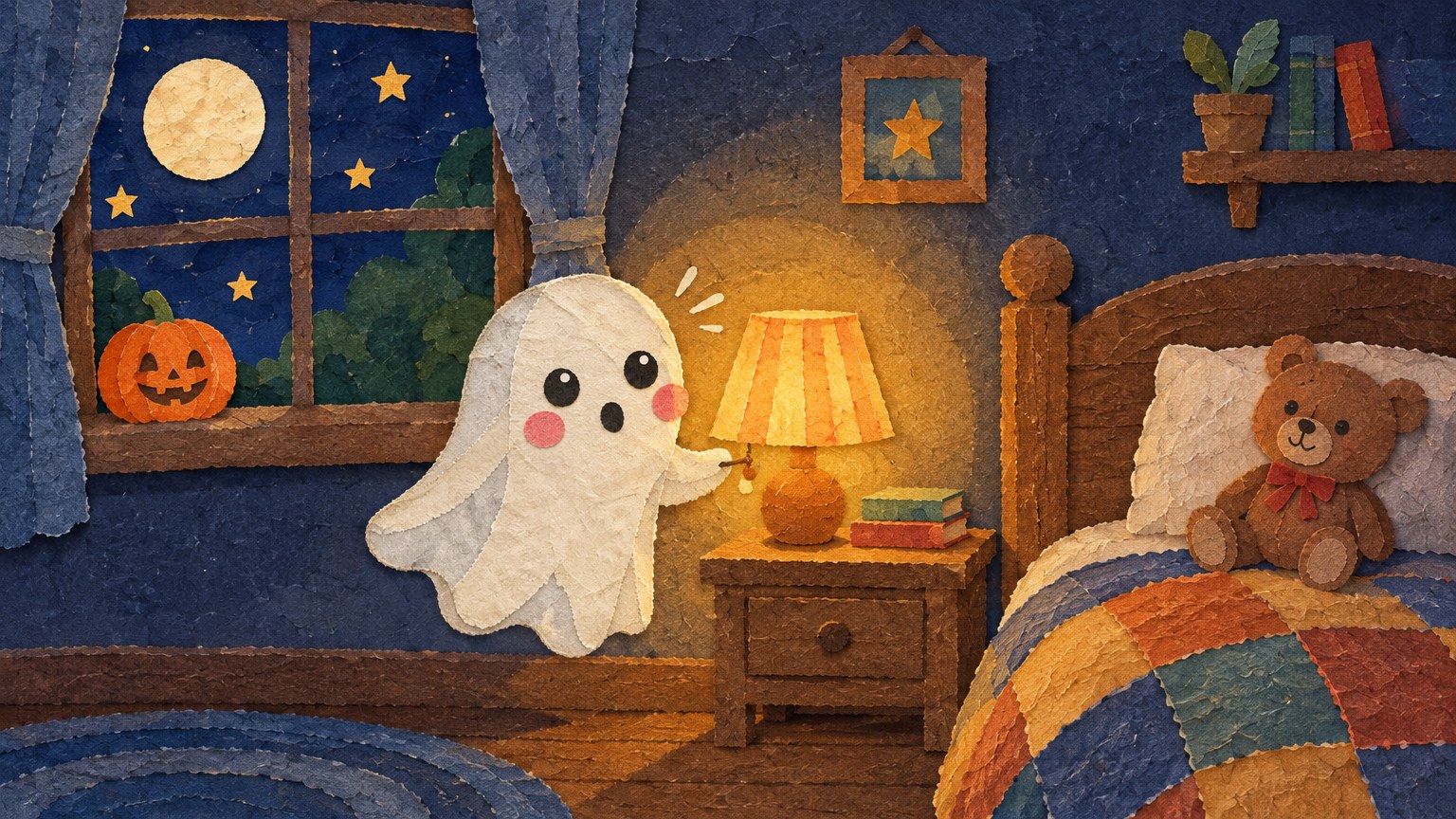
You’ll need: A paper ghost or stuffed animal, a small blanket, and a lamp.
This ghost doesn’t want to haunt anyone. It wants to get comfortable, but it doesn’t like the dark.
Your child can arrange its bed and decide what might help: a light left on, a nearby friend, or a favorite bedtime song. The room can stay bright throughout the game.
The ghost doesn’t have to stop being afraid by the end. A comfortable bed and some company can be the whole happy ending.
5. Tell a three-part Halloween story together
You’ll need: One character from your drawing, craft, or pretend play.
A short story can begin with three unfinished sentences:
- Someone wanted something: “The little witch wanted to take her pumpkin to the moon…”
- Something silly got in the way: “But her broom would only fly backward…”
- Someone helped: “So her friend the dragon…”
Take turns finishing the sentences. A younger child can choose between two ideas; an older child may want to invent the whole next scene.
If a story starts heading somewhere uncomfortable, you can pause and ask, “Should we change that part?” The ending can be a snack, a reunion, or everyone heading home to bed.
Audio story options for a quieter finish
A dragon who understands being afraid
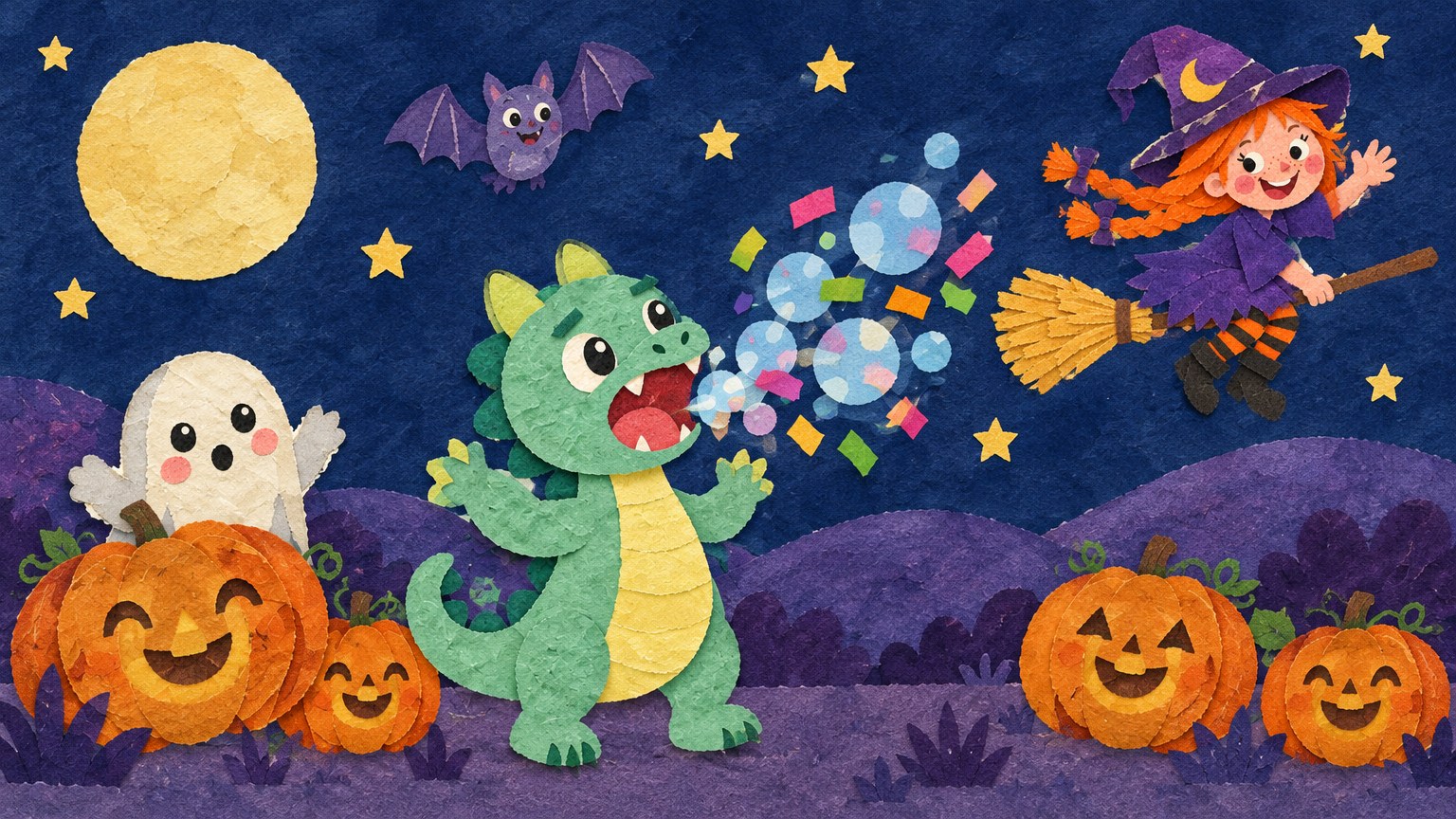
For a child who likes dragons, Storylandia’s “The Dragon Who Was Afraid of Fire” offers another character to talk about. Felix is afraid of fire, and his fire-breathing lessons produce smoke, soap bubbles, and confetti instead of flames.
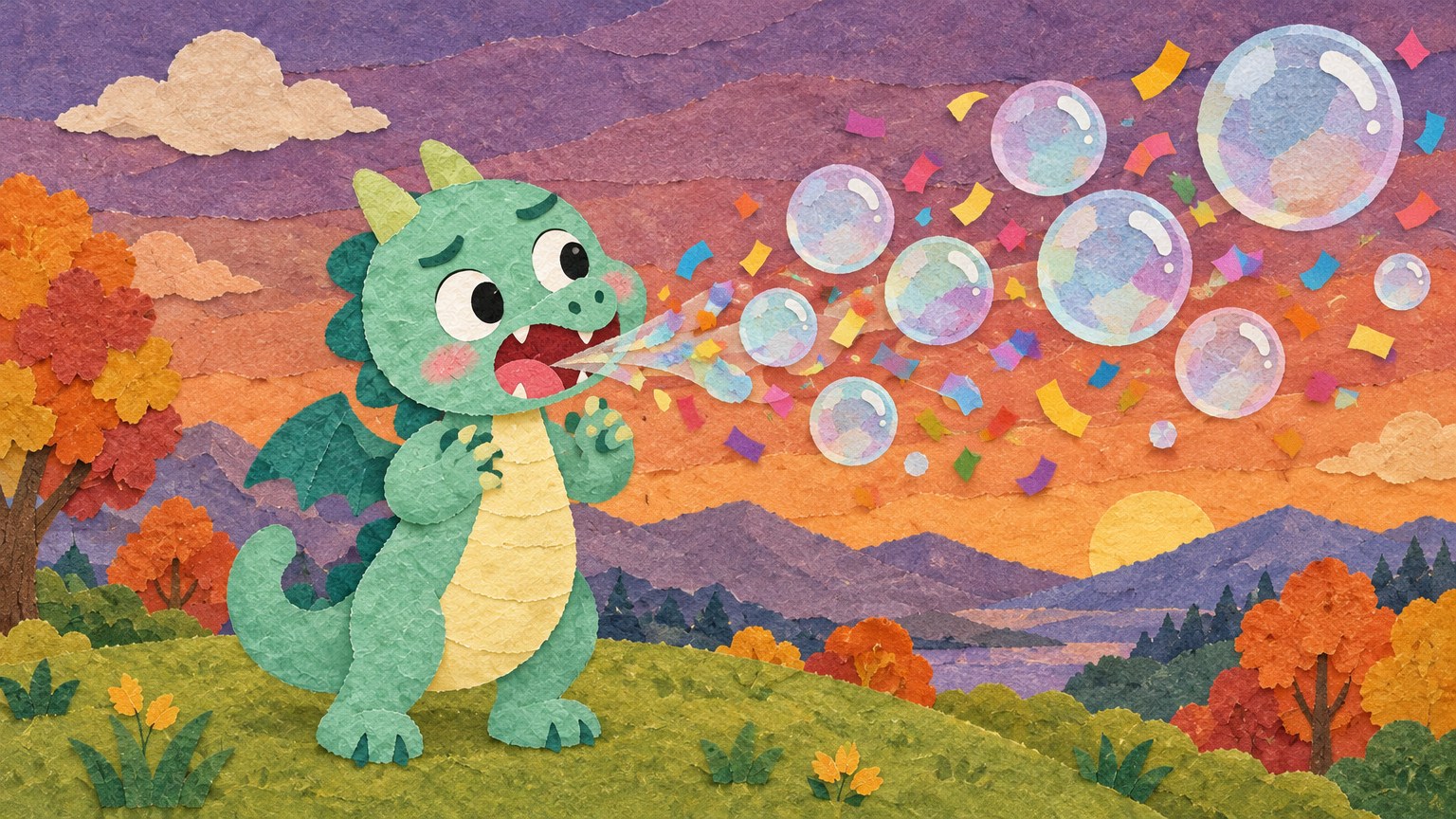
The bedtime audio story is about 13 minutes long, with paper-cut style illustrations and printable coloring pages. A simple follow-up question could be “What would you say to Felix when he’s having trouble?”
A note for sensitive listeners: The story includes fire and a scene in which Felix’s cousin Leon gets trapped behind dry branches. Listening first can help you decide whether it fits your child’s comfort level.
A story inspired by your child’s artwork
If your child wants to keep playing with the character they drew, Storylandia’s Create a story includes From a drawing. You can take a photo of the drawing or craft with the app’s camera, or select a photo from your gallery. AI then creates its own story inspired by the picture, with illustrations.
The classic story option lets you enter the characters, setting, and plot direction. Your starting idea might be a friendly monster helping a pumpkin find its missing hat, with no villains or frightening surprises. Because the resulting story is AI-generated, an adult can listen first rather than assume every detail will match that intention.
A small gift for your next story
Code HALLOWEEN adds 50 Magic Quills for creating your own stories in Storylandia.
- Validity: The quills are valid for 30 days after they are added to the account.
- Android: The code-entry path in the app is Magic Quills → Promo codes → “Enter code”.
- iPhone and iPad: The code can’t be entered in the app. Our team can add the quills to your account when you send us a message on Facebook or Instagram.