Drawing gives kids a chance to practice hand movements, experiment with ideas, and make choices of their own. When they talk about a picture, they also get practice putting ideas into words. Supporting that process doesn’t require an art lesson: paper, crayons, and room to try things can be enough.
What children can practice through drawing
For preschoolers and early elementary schoolers, drawing offers several kinds of practice. Not every drawing involves all of them, and the finished picture doesn’t need to look recognizable to an adult.
- Hand and finger movements. Holding a crayon, making marks, and changing direction give children opportunities to practice controlling their movements.
- Making decisions. Children choose colors, decide where things belong, and work out whether to add something or leave it as it is.
- Trying out ideas. A child can experiment with overlapping colors or invent a house that floats. The page gives them space to explore without needing a realistic result.
- Using language. If a child wants to explain the picture, they can name its parts, describe a character, or tell you what happens next.
A picture can also give a child something to point to while talking about a feeling or experience. But colors and shapes alone don’t tell you what a child is feeling. Their explanation matters more than an adult’s guess.
How to encourage drawing without taking over
You don’t need to turn each drawing session into a lesson. A few small changes in how you respond can leave more room for your child’s ideas.
Offer a starting point when they need one
Some children know exactly what they want to draw; others appreciate a suggestion. “What do you feel like drawing?” leaves the choice open.
If they’re stuck, a dot, a wavy line, or a shape can be a starting point rather than a model to copy. Our International Dot Day activities at home offer more ideas for beginning with a simple mark.
Notice details without grading the picture
Instead of deciding whether the drawing is good or accurate, you can describe something you notice: “You filled this whole corner with blue,” or “There are lots of little lines around this shape.”
That gives your child a chance to explain—or simply keep drawing. You don’t have to guess what every shape represents.
Leave room for things that don’t make sense to you
A dog with five legs or a green sun doesn’t need correcting. If your child asks for help drawing something, you can offer it without redesigning the whole picture.
Drawing alongside them is another option. Each of you can make your own version rather than working toward one adult-approved result.
Let a drawing be finished
Not every picture needs a background, a title, or an explanation. Sometimes the enjoyable part was making the marks, and your child is ready to move on. Storytelling is an invitation, not the next required task.
How to turn a drawing into a story together
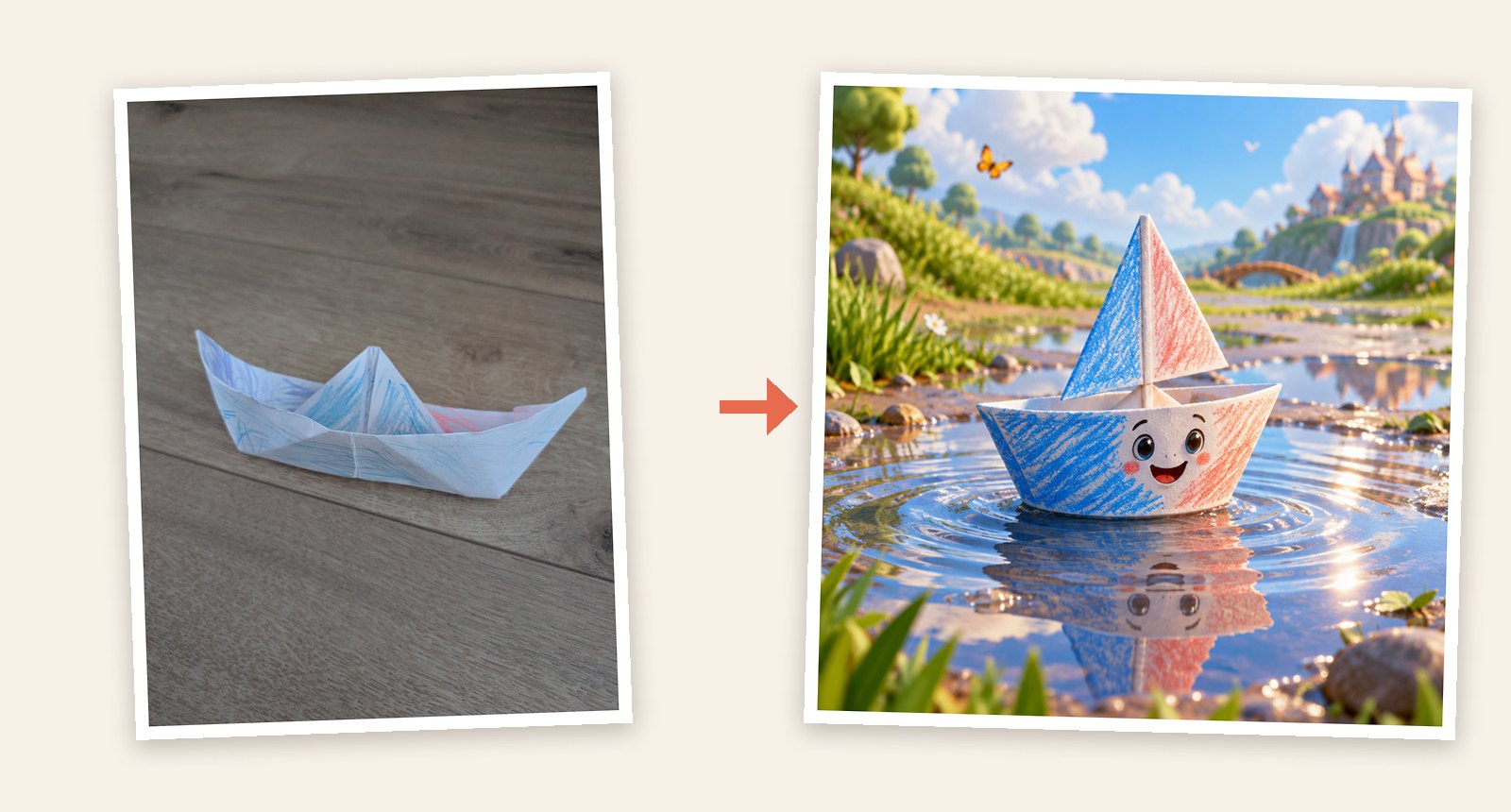
If your child wants to keep playing with the picture, you can build a short story around one part of it. A character doesn’t have to be a person or animal: a cloud, a shape, or a paper boat can have something happen to it.
These four prompts give you a loose starting point:
- A character: “Who is this?” or “Which part of the picture should our story be about?”
- A place: “Where does it live?” or “Where is it going?”
- Something that happens: “What happens one day?”
- An ending: “How does the story end?”
There’s no need to ask all four questions in a row. One answer may be enough to get things going.
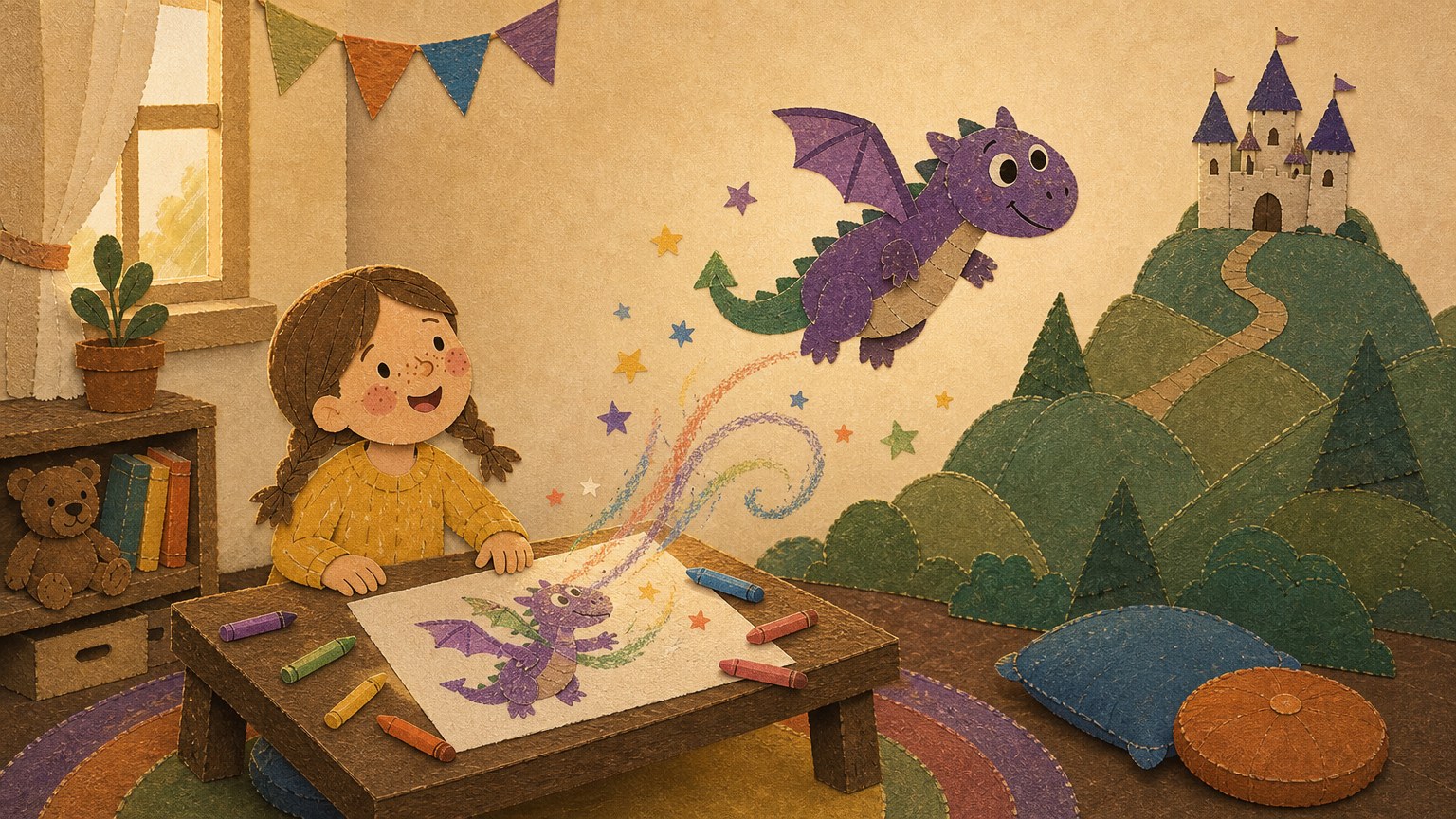
For example, if your child draws a dragon, you might ask where it lives. If they say it lives inside a shoe, that can become the setting—without replacing it with a more familiar castle. You can take turns adding ideas, with your child free to accept or change your suggestions.
If they want a record of the story, you can write their words beside the drawing. A few sentences are enough. An older picture can also become the starting point for another episode: perhaps the same character visits a new place or meets someone new.
An optional AI story inspired by the drawing
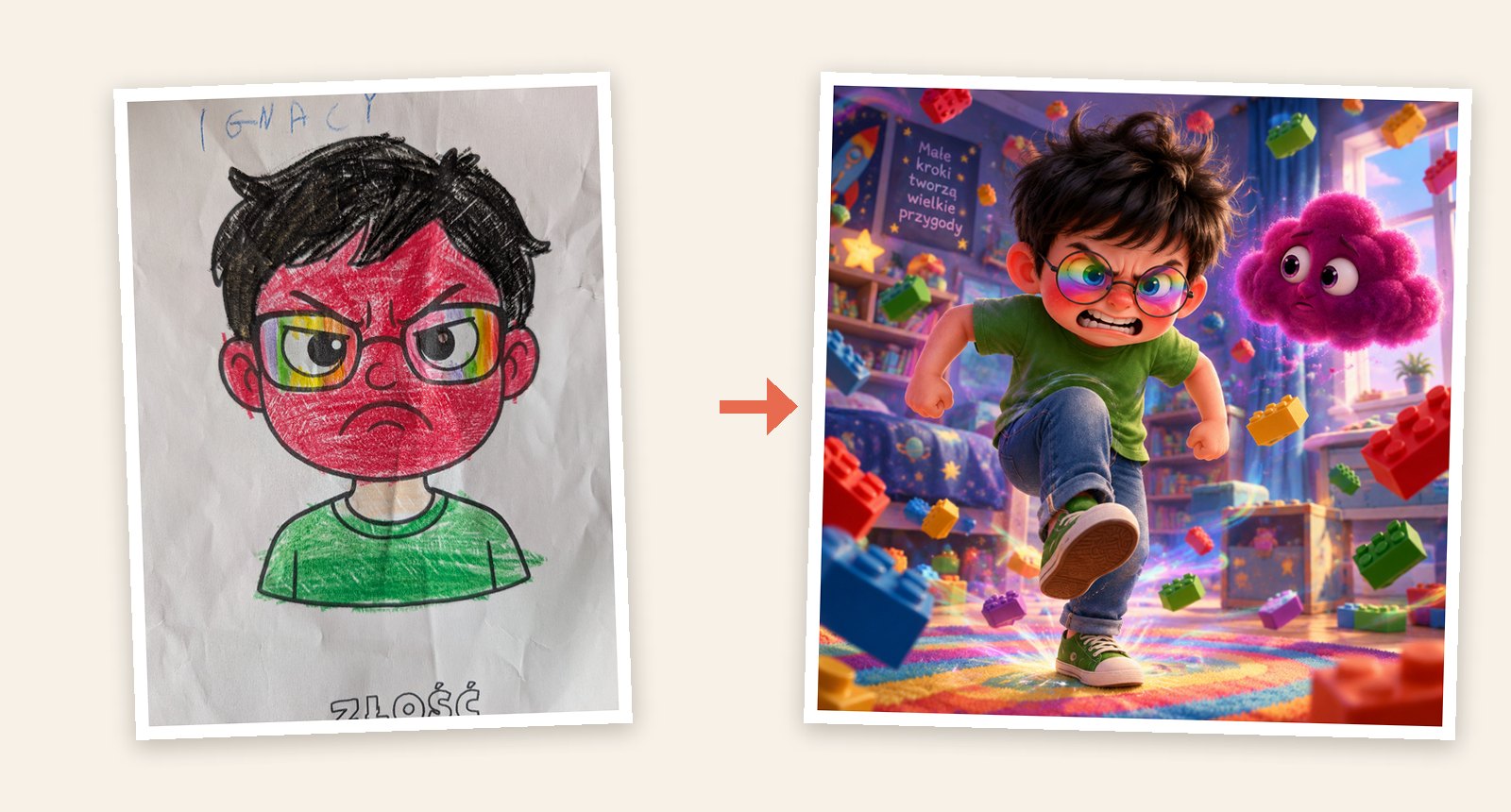
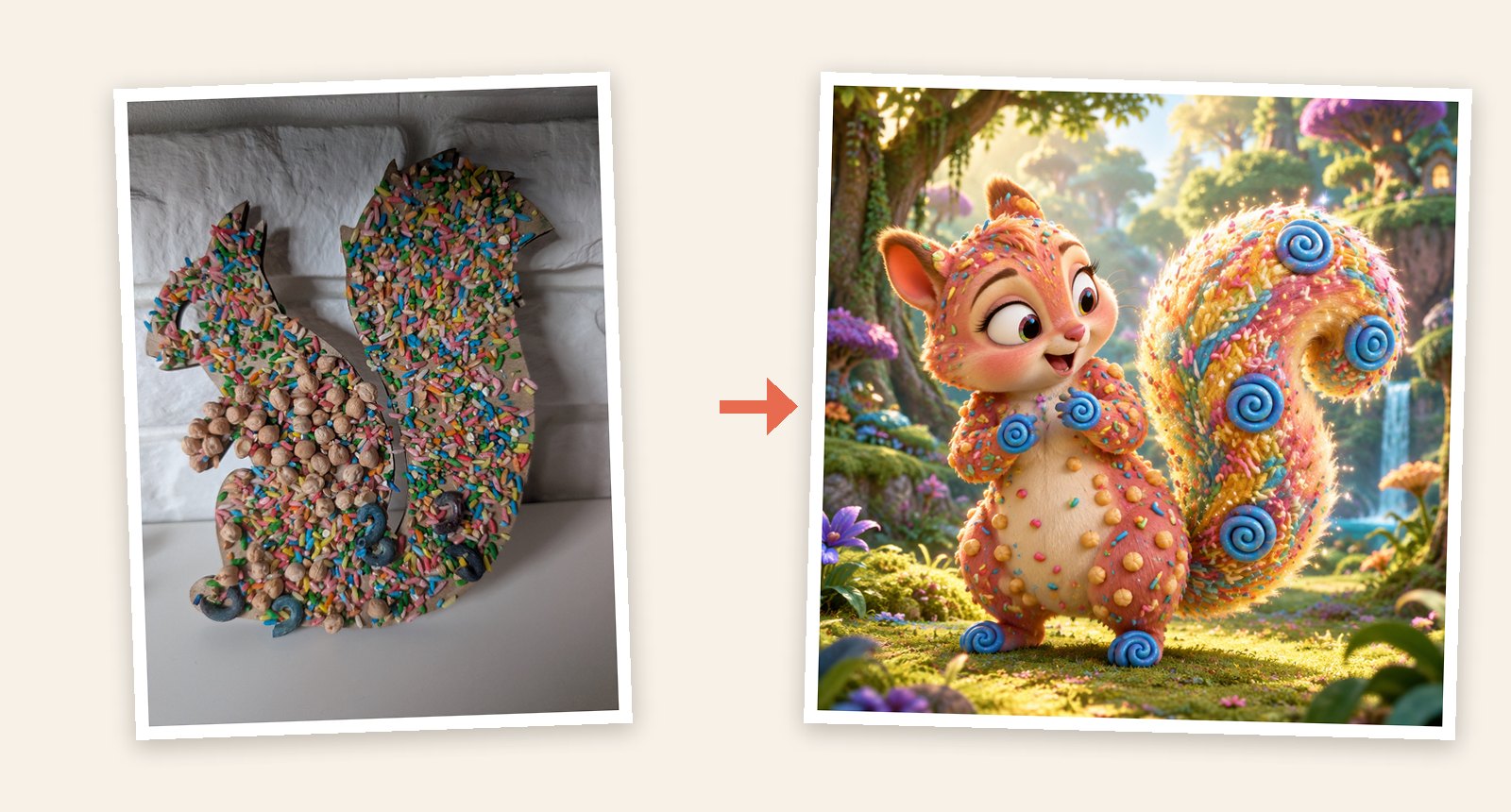
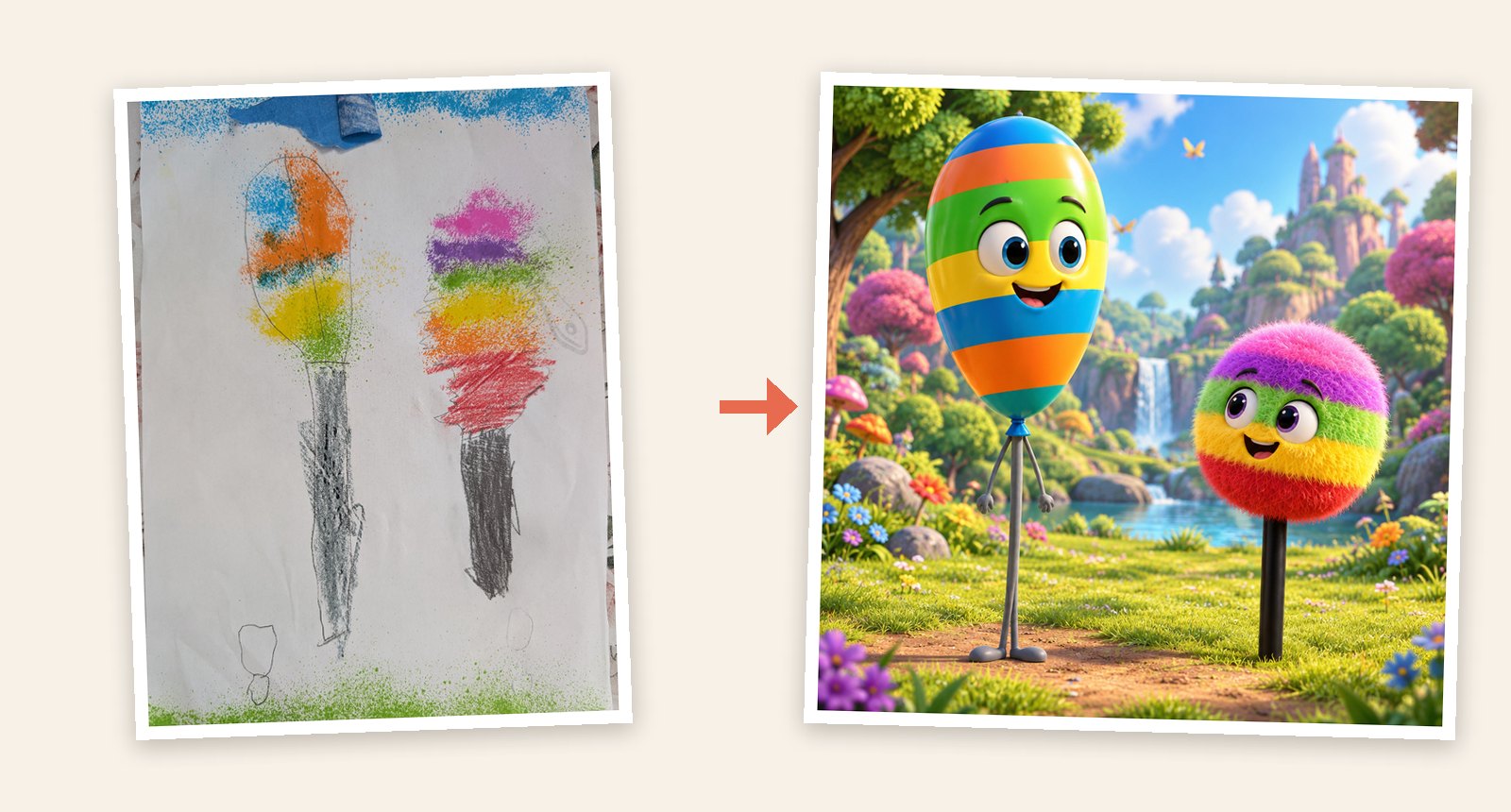
Once your child has had room to tell their version, an AI-generated story can offer a different interpretation to compare with it.
In Storylandia’s story creator, the option is Create a story → From a drawing. A parent can take a photo of the artwork or upload one from the phone’s gallery, then choose the story length, the number of illustrations, and whether to include audio. AI creates its own story inspired by the image, with illustrations.
The feature works in English and uses Magic Quills, the app’s in-app currency.
The AI’s version is not an explanation of what your child meant. It may take the picture in a different direction. After reading or listening together, you can compare versions: “What did it keep from your drawing?” and “What did it change?” Your child’s original story doesn’t need to change to match the generated one.
Examples of artwork and generated illustrations
Each image below shows the child’s work on the left and the first AI-generated illustration on the right. These examples were made with From a drawing in the Polish version of Storylandia, which is why some visible writing is in Polish. They include drawings, a collage, and a folded paper boat.