International Dot Day is September 15, a celebration of creativity inspired by The Dot by Peter H. Reynolds. At home, you can celebrate with paper, crayons, and one of the three activities below. There’s no need for a special outfit or a finished piece of art.
What is International Dot Day?
In The Dot, published in 2003, a girl named Vashti believes she can’t draw. Her teacher encourages her to “just make a mark and see where it takes you.” That first dot becomes a starting point for experimenting.
International Dot Day began on September 15, 2009, when teacher Terry Shay introduced the book to his class. The celebration takes its cue from Vashti’s experience: making something can begin with a small attempt, rather than a plan for a perfect picture.
3 easy Dot Day activities at home
These activities work for preschoolers and elementary-age children, with room to keep things simple or add a challenge. You can choose whichever interests your child; there’s no need to do all three.
1. Take turns transforming a dot
You’ll need: Paper and crayons or markers.
One person puts a dot anywhere on the page. Then you and your child take turns adding one mark, line, or shape.
The dot might become a bug’s eye, a planet, or part of a pattern. It can also stay a dot surrounded by other marks. Neither person needs to decide what the picture will be in advance.
For a child who likes a challenge, each turn could use a different color or only curved lines. A younger child might prefer making dots while you draw around them.
If your child says, “I can’t draw,” a low-pressure response could be: “It can just be a dot. We don’t have to turn it into anything.”
2. Go on a dot hunt
You’ll need: Nothing, though paper and a crayon can help keep track of discoveries.
Together, you can look around one room for dots and circles: a pattern on a shirt, the center of a flower in a picture, or a round clock face.
Your child gets to decide what counts. Does a toy wheel belong on the list? What about a spot on a stuffed animal?
For a younger child, simply pointing out finds may be enough. An older child could group them by size or color, or look for patterns made from repeated dots. This gives children who aren’t interested in drawing another way to take part.
3. Turn a dot into a story
You’ll need: One dot on paper—or an imaginary one.
A dot could be a tiny planet, a door on the moon, or a ladybug’s missing spot. These questions can help you build a story together:
- Where is the dot?
- Who notices it?
- What happens next?
You can take turns adding a sentence, with your child choosing when the story ends. If an open-ended question feels too big, two possibilities may help: “Is the dot hiding something, or is it trying to get somewhere?”
There’s no need to write the story down unless your child wants to keep it.
An optional audio-story follow-up
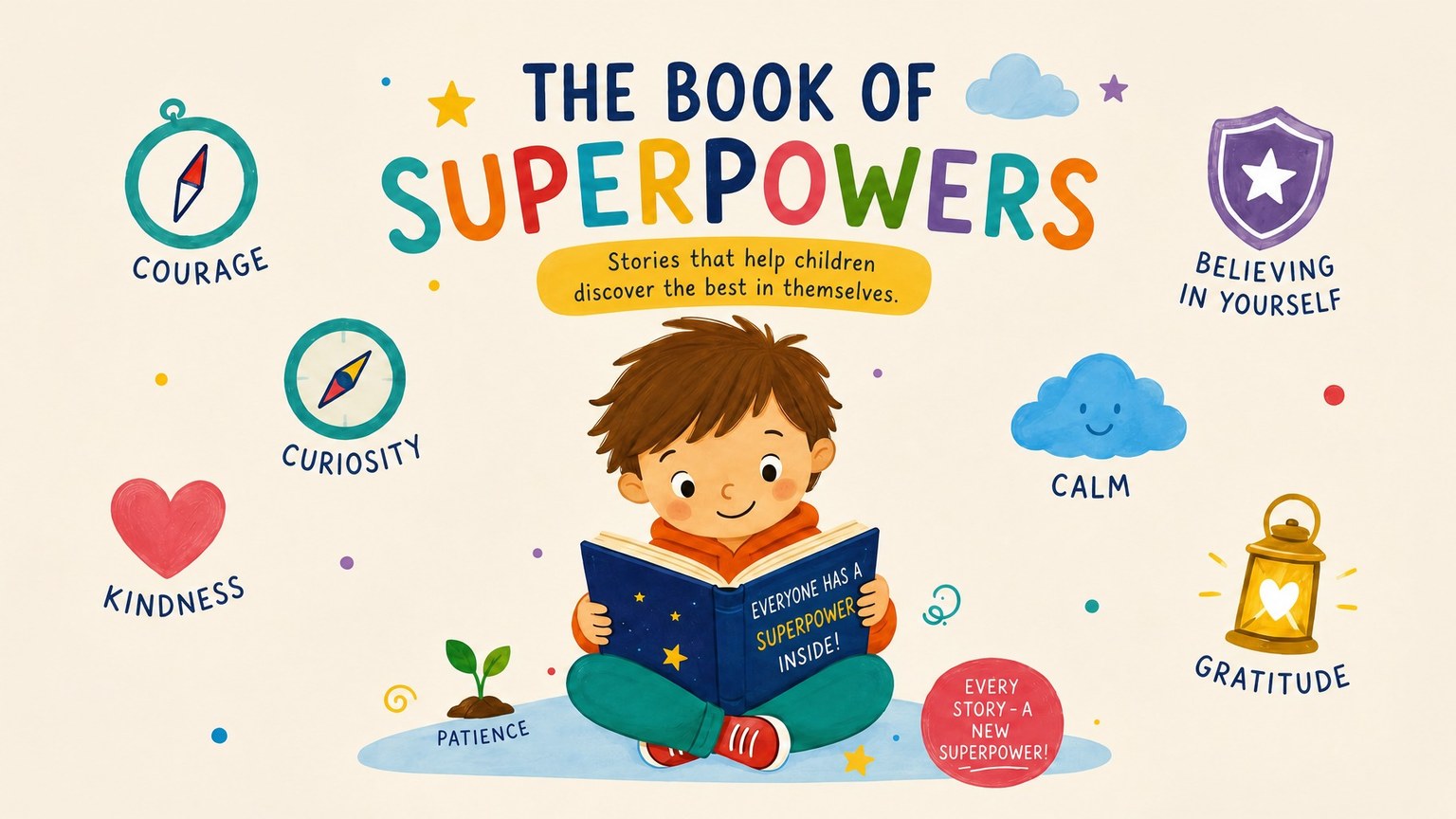
If your child would rather listen, Storylandia’s audio story series include The Book of Superpowers, with stories about everyday qualities such as courage, curiosity, patience, and kindness. After listening, you might ask, “Which of those could help when you’re trying something new?” Your child can answer, draw a response, or simply enjoy the story without a discussion.
For a child who wants to keep inventing, Storylandia’s Create a story feature lets a parent or child make a personalized story. The dot character from the activity above can serve as a starting idea, rather than having to come up with something new.