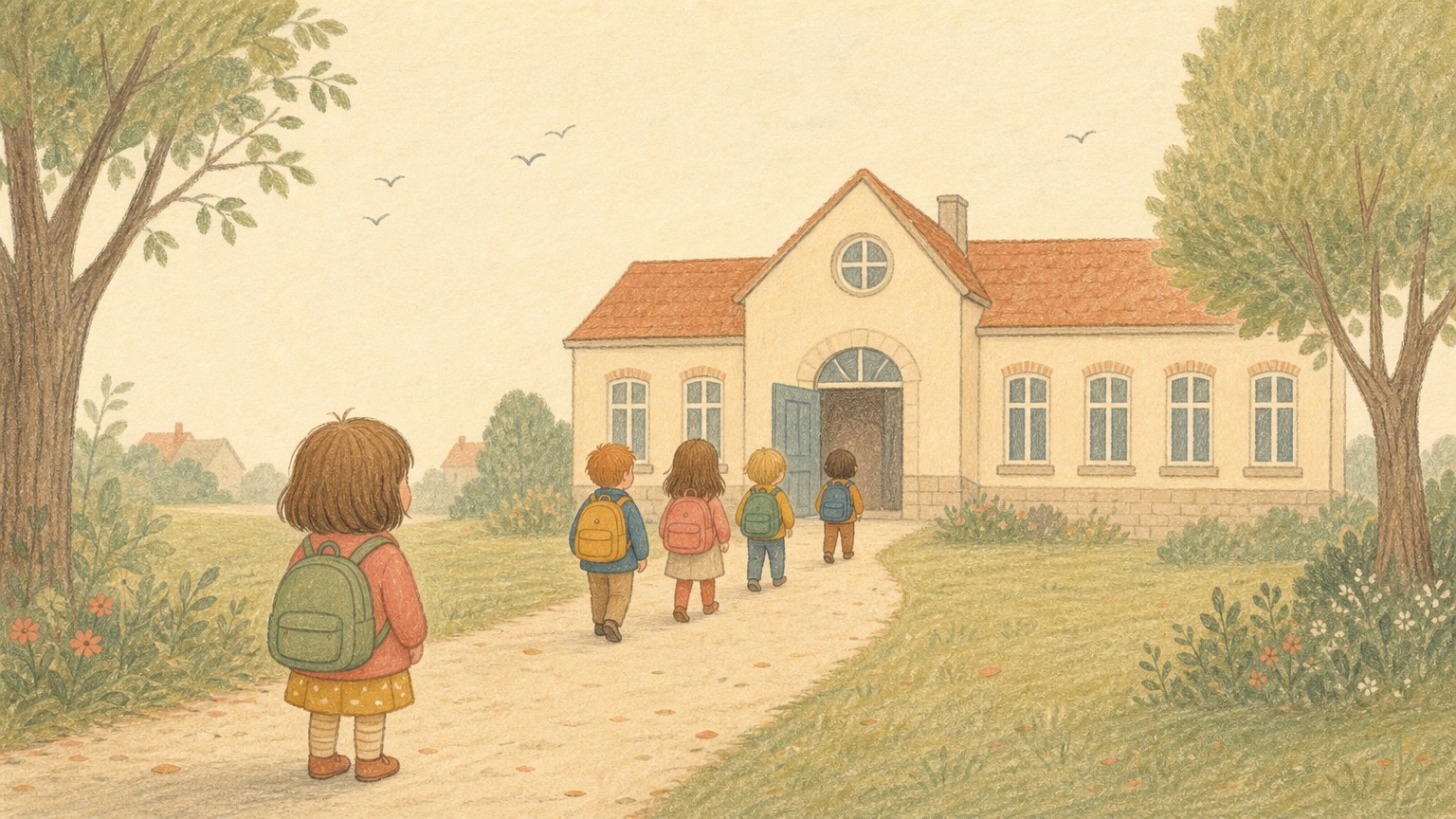
If your child is nervous about going back to school, a story can offer a less direct way to talk about what’s bothering them. Instead of asking why they’re scared, you can begin with a character: “What do you think she’s worried about?” From there, you may be able to name one concern and make a small plan together. The goal isn’t to make every worry disappear before the first day.
Find out which part of school feels hard
“I don’t want to go” can mean many things: not knowing where to sit, missing an old friend, worrying about mistakes, or dreading goodbye. Some children explain their concerns readily. Others may become quieter or more irritable. Those changes can have many causes, so it helps to ask rather than assume.
A specific, gentle question may be easier to answer than “How do you feel about school?”
- “Is there anything you wish you knew about your new class?”
- “Which part of the first day have you been thinking about?”
- “Is there something you’d like help with?”
If your child names a worry, you can acknowledge it before offering a solution: “Not knowing anyone sounds hard.” That leaves more room for conversation than “You’ll make friends right away,” which is something neither of you can know yet.
A shrug doesn’t have to lead to more questions. You can leave the conversation open: “We can talk about it later if you want.”
Make one small plan together
Once you understand a concern, the next step can be practical and specific. Your child doesn’t need a plan for every possible problem—just somewhere to start.
- If they’re unsure what arrival will look like: You can check the school’s instructions together and find out where they’ll go and who will help them.
- If they’re worried about joining other children: You might practice a simple opening, such as “Can I play?” or “What are you building?”
- If they’re afraid of getting stuck: You can rehearse asking a teacher, “Could you help me get started?”
These are possibilities, not a checklist every family needs to complete. The useful step is the one that addresses your child’s actual question.
School preparation can also make room for things your child wants to discover. Our article on encouraging curiosity before school starts explores that side of getting ready.
Use a story when direct questions aren’t helping
For some children, discussing a character’s worry can feel less personal than explaining their own. A familiar picture book or audio story about a new place, a friendship, or a difficult task can give you something concrete to talk about.
There’s no need to announce that you’ve chosen a story to discuss school worries. You can simply read or listen together.
Afterward, one question is enough:
- “What do you think the character was worried about?”
- “Which part seemed hardest?”
- “Who could help?”
The conversation can stay with the character. Your child doesn’t have to connect the story to their own life for the time together to be worthwhile.
If they seem interested, you might offer a bridge: “Does any part of that remind you of school?” If they change the subject, you can follow their lead. Not every story needs a discussion, and not every discussion needs a solution.
Two story examples for common school worries
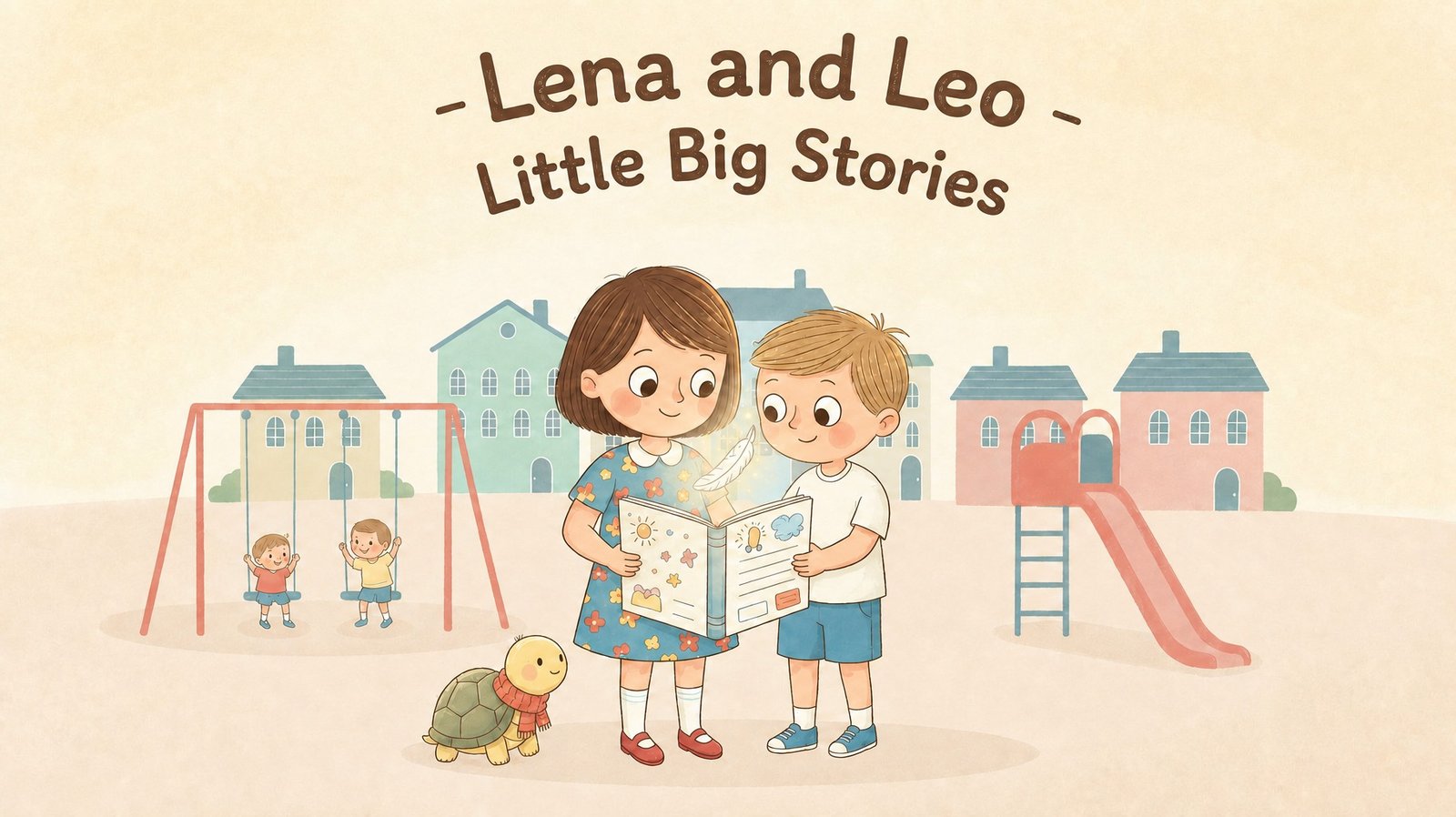
The following examples come from Lena and Leo - Little Big Stories, a Storylandia audio story series for ages 4–10. The same prompts work with any book or audio story your family already has.
A New Place: worrying about finding a friend
In “A New Place,” Lena arrives at Forest Meadow Summer Camp without her friend Leo. She has a tight knot in her tummy and wonders, “What if I don’t have anyone to play with?”
During a get-to-know-you game, a girl sits beside her and whispers that she’s a little nervous too. Later, they build an obstacle course from sticks and pinecones.
The setting is camp, not school, but the uncertainty may be familiar. A question such as “What did Lena find out about the other girl?” keeps the conversation grounded in the scene. It gives you a chance to talk about how someone else might feel nervous even when you can’t tell.
There’s no need to turn that into a promise that a new friend will appear immediately. You can explore a smaller question instead: “What could you say to someone sitting next to you?”
The Hardest Beginning: worrying about getting it wrong
In “The Hardest Beginning,” Lena is afraid her drawing will be the worst in her preschool class. She can’t make the first line on a blank page.
Here, the useful conversation is about starting, not making the best drawing. You might ask, “What could Lena ask her teacher?” or “What would you say to a friend who felt that way?”
If your child recognizes the worry, you can think together about one manageable first step for a task they’re facing. They don’t have to feel completely confident before asking for help.
When school worries need more support
A story can help start a conversation, but it can’t resolve every school concern. If your child describes a specific problem, such as being excluded or feeling unsafe, that deserves attention beyond storytime.
If worry is intense, persists, or interferes with sleep, eating, or attending school, it’s worth contacting your child’s teacher or school counselor and discussing the concern with their pediatrician or a qualified mental health professional.
For everyday first-day nerves, a useful outcome may be much smaller than a suddenly confident child: one concern you understand better, one person they know they can ask for help, or one question you can find an answer to together.