Encouraging your child’s curiosity can be as simple as listening to a question, making room for a guess, and helping them check an idea. You don’t need a science project or a long discussion. And although “What do you think?” can open a conversation, you don’t have to say it every time your child asks why.
When to answer—and when to ask “What do you think?”
Sometimes a child wants to explore an idea. Sometimes they just want to know something. Both are good reasons to ask a question.
If your child seems eager to figure something out, you might respond with:
- “What do you think might be happening?”
- “What did you notice?”
- “How could we find out?”
One question is enough to start. There’s no need to work through the whole list or keep prompting until your child gives a particular answer.
If they offer a guess, you can listen without treating it as correct: “That’s an idea we can check.” Then you can help them compare it with what they observe or find in a reliable source.
If the response is “I don’t know—can you just tell me?”, a short, accurate answer is fine. An invitation to think shouldn’t become a test your child has to pass before getting help.
Make room for small discoveries
You can explore plenty of questions with things already around you:
- A block tower: “What could we change to make it steadier?” Your child could try a wider base, then rebuild and compare.
- A puddle: “Do you think it will look the same tomorrow?” A second look gives you something to discuss, whether it has changed or not.
- Leaves moving outside: “What do you notice when the wind picks up?” Watching together may lead to another question—or simply a few moments of attention.
These are possibilities, not a daily activity checklist. One interesting observation may be enough.
Not every child shows curiosity through a stream of “why” questions, either. Watching closely, taking a construction apart, or trying a different way to build something can also show interest. You can comment on what you notice—“You changed the bottom of your tower”—without requiring an explanation.
What to say when you don’t know or don’t have time
“I don’t know. Let’s find out” is a useful answer when you can follow it with a small next step. That might mean checking a children’s nonfiction book, an atlas, or a science museum’s website together.
You don’t need to ask your child to guess first. Looking up an answer together can also be a way to explore a question.
When you’re busy, a clear response is more useful than promising an investigation you can’t manage:
“That’s a good question. I need to finish making dinner, but we can look it up afterward.”
A note on your phone or a quick drawing can help you remember the question. There’s no need to build a backlog of things to research; saving one that your child keeps returning to is enough.
Back-to-school questions may need reassurance
As school approaches, some questions may be about uncertainty rather than facts.
“Why can’t I stay home with you?” may not be an invitation to explain the purpose of school. You might begin with, “It sounds like you want us to stay together. What part of going to school are you wondering about?”
That leaves room for a concern you can address directly. Our guide to supporting a child’s feelings before school starts looks more closely at those conversations.
Using an audio story to explore a question
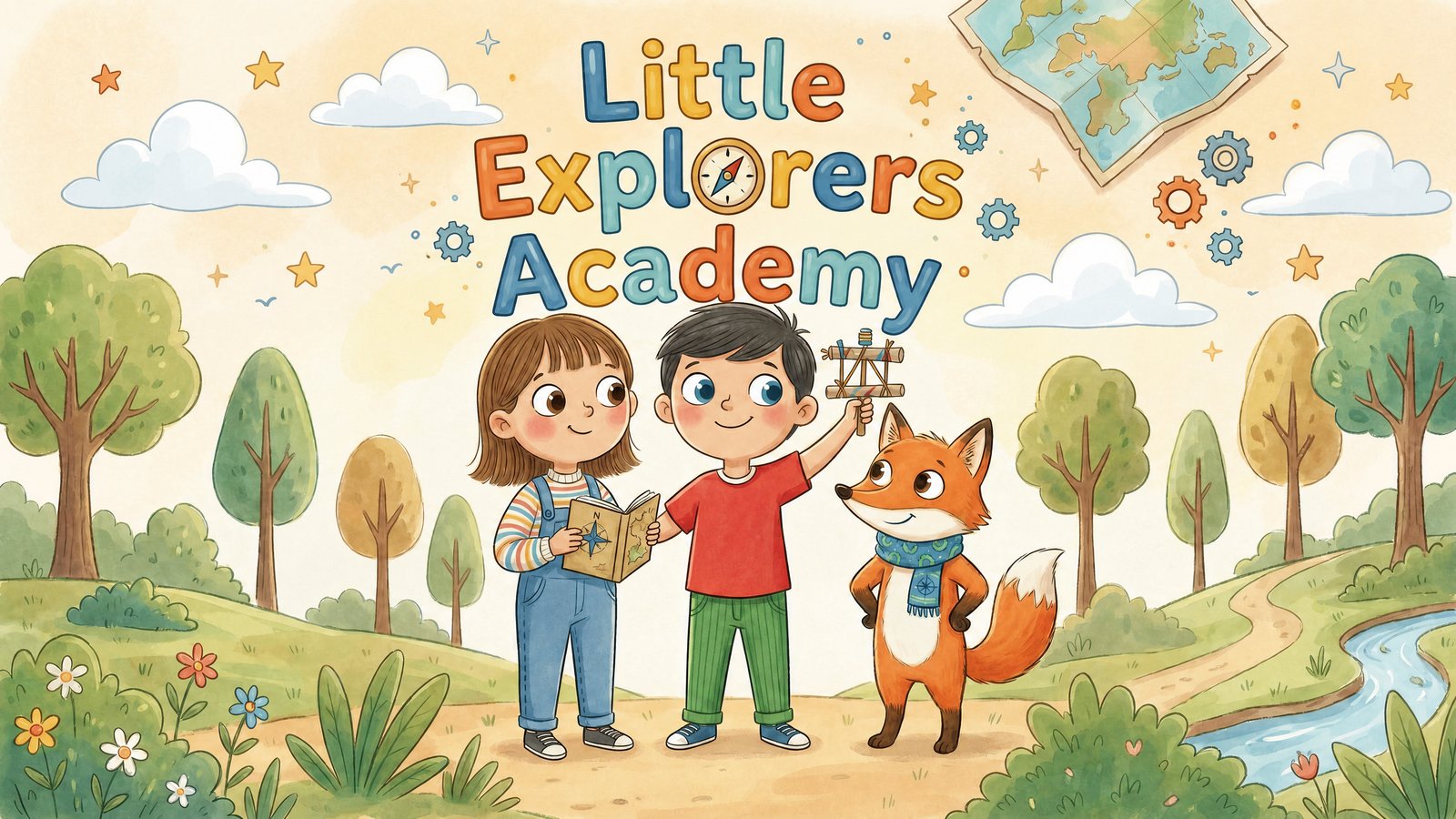
For families who enjoy listening together, Little Explorers Academy is a Storylandia audio story series for ages 4–10.
Each episode begins with a question from the children, Sophie and Jack. Their guide, Niko the fox, responds, “That’s a very good question,” rather than immediately giving the answer. They work it out through an adventure and a simple experiment.
A useful starting point is a question your child already has. Where Does Rain Come From? could connect with an interest in weather; How Do Airplanes Fly? could suit a child who keeps watching planes overhead.
After listening, an optional “What are you still wondering about?” can help you decide whether to look something up or explore further together. If your child would rather just enjoy the story, there’s no need to add an activity.